
There is a lot happening in employment law right now.
Several important changes have already come into force, more are taking effect over the coming months and further changes are expected throughout 2027.
To make things a little easier, the Inspired HR team has brought together some of the most relevant changes in our Employment Law Changes 2026–2027 Guide. We've broken it down into what's already happened, what's coming next and what employers need to start preparing for in 2027.
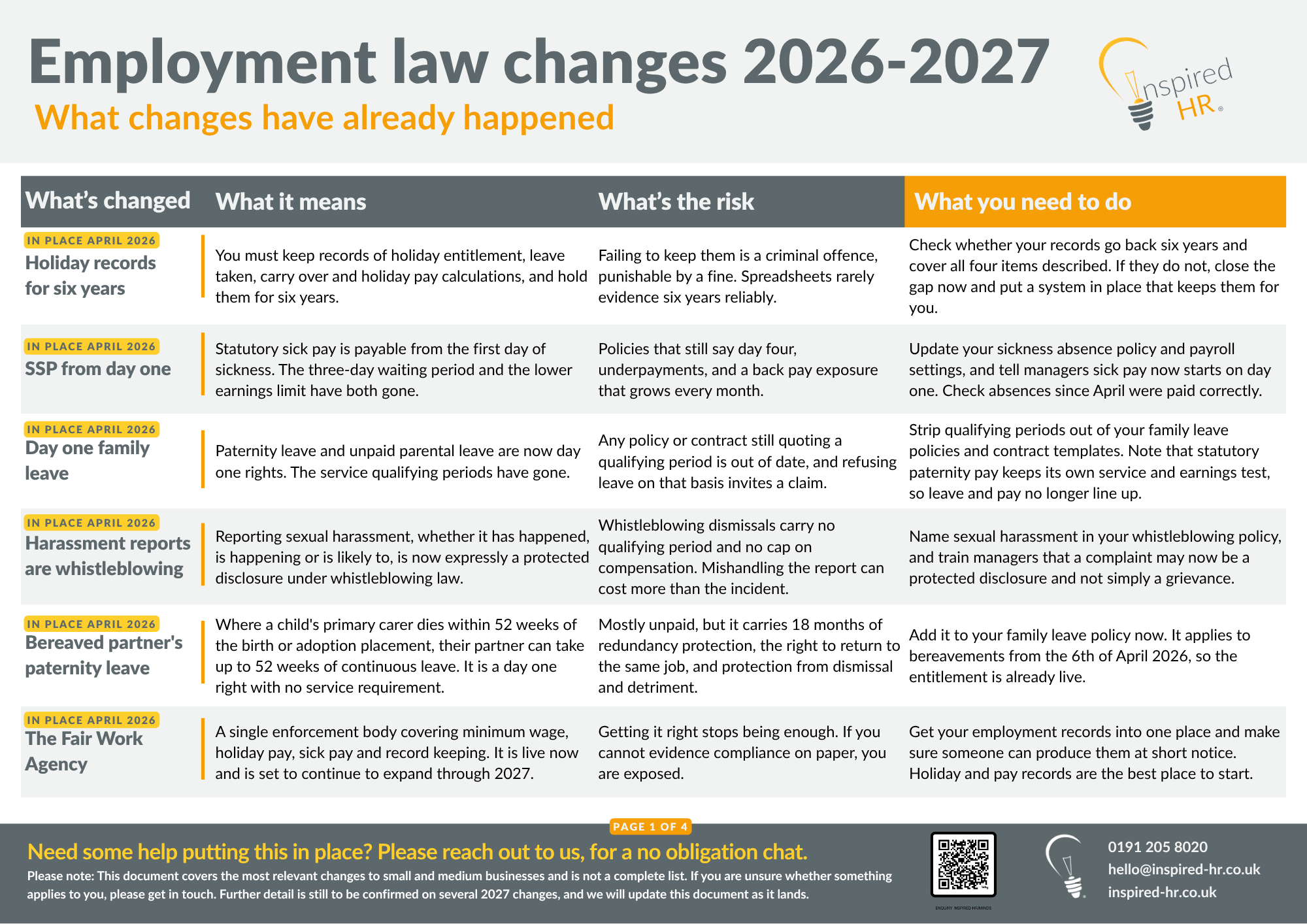
What Employment Law Changes Have Already Happened?
A number of significant changes came into force in April 2026.
These affect areas including holiday records, Statutory Sick Pay, family leave, sexual harassment reporting and the introduction of the Fair Work Agency.
For employers, some of these changes may mean reviewing existing policies and processes, while others place greater importance on keeping accurate records and being able to demonstrate compliance.
What Employment Law Changes Are Coming Next?
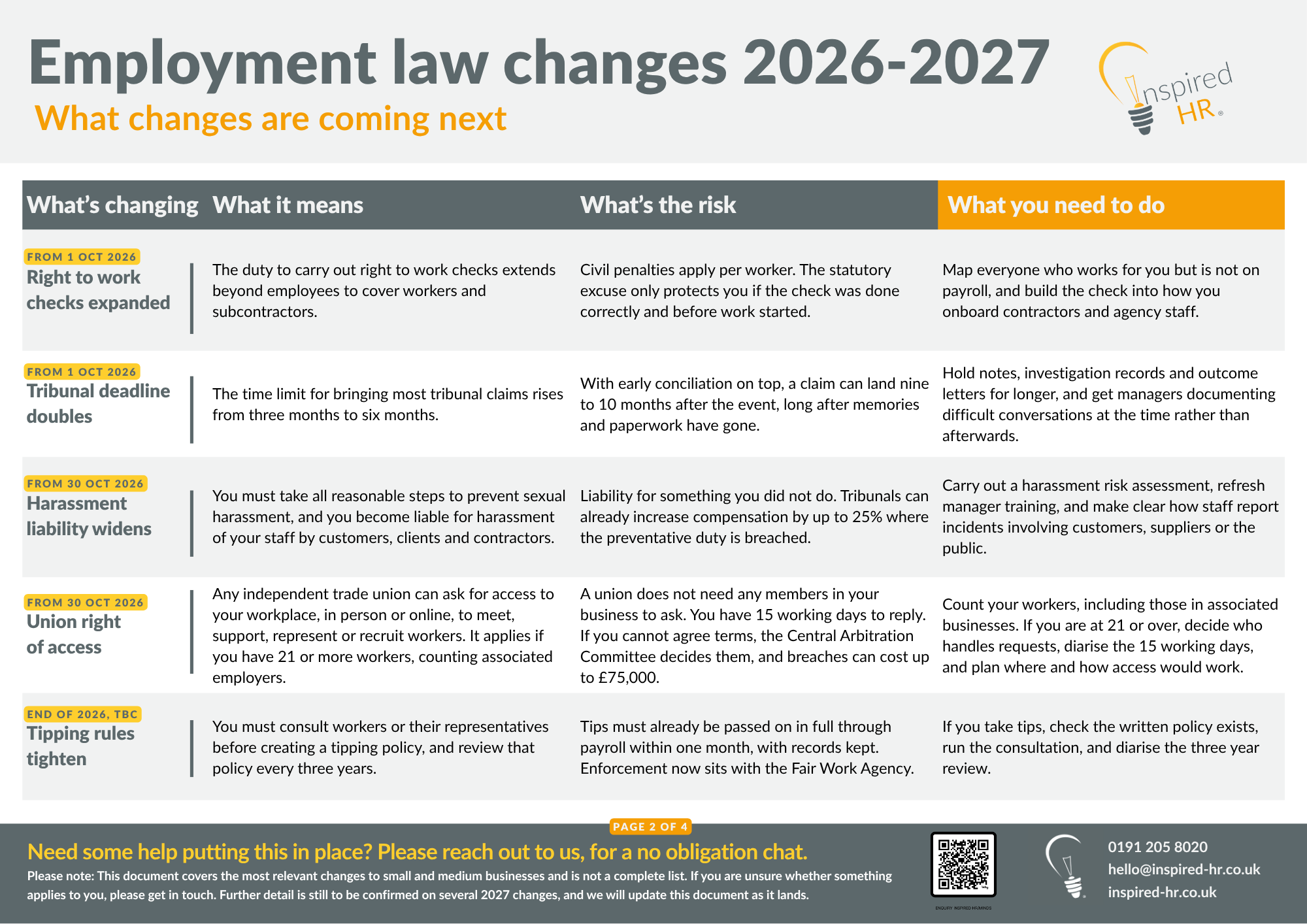
There are more changes for employers to prepare for before the end of 2026.
These include changes to right to work checks and employment tribunal time limits, alongside increased responsibilities around preventing sexual harassment and further changes to tipping requirements.
Looking slightly further ahead, the qualifying period for ordinary unfair dismissal is also due to reduce from two years to six months from January 2027.
What Employment Law Changes Are Coming in 2027?
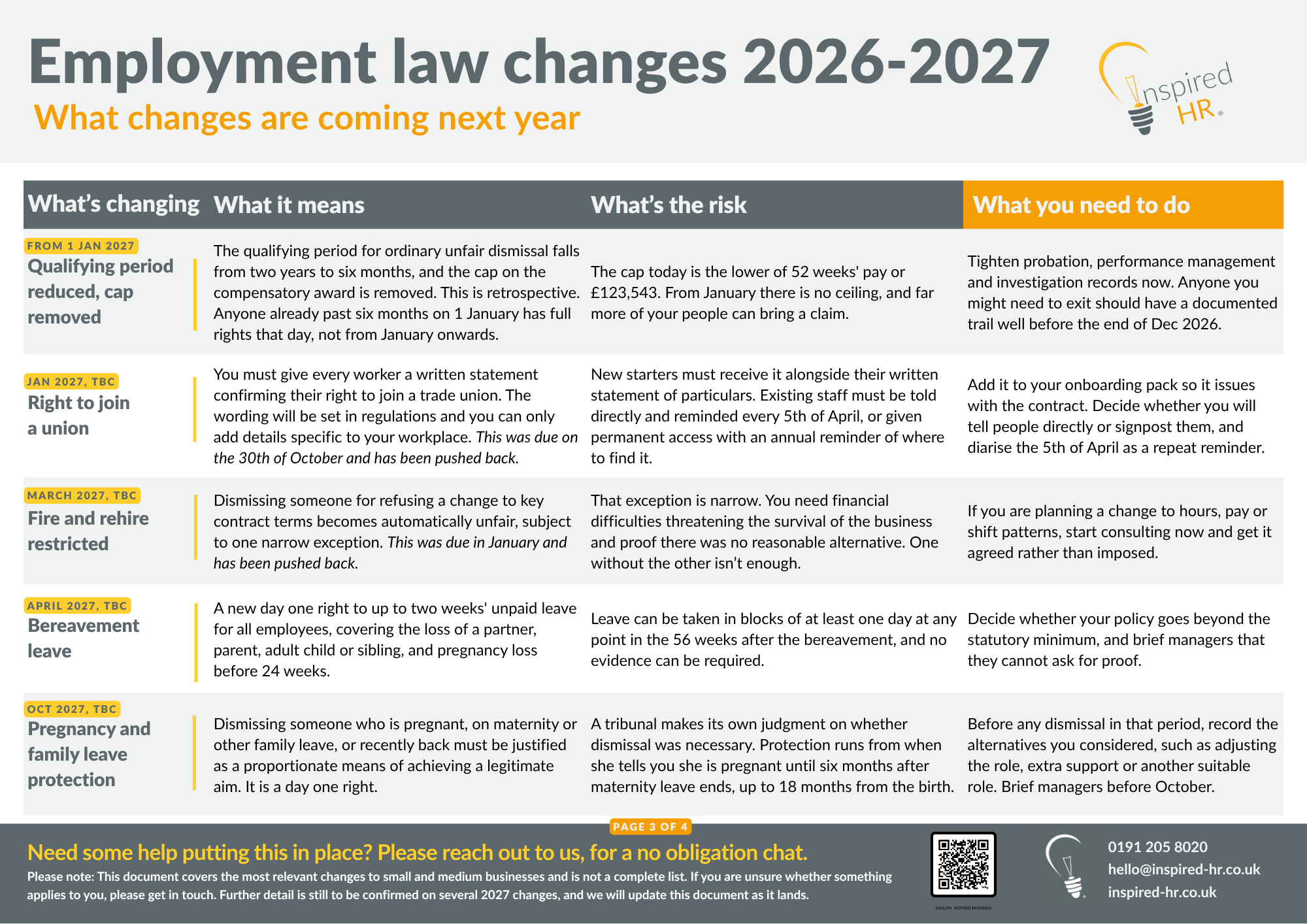
And there's plenty more on the horizon.
Changes expected during 2027 include restrictions around fire and rehire, the new right to bereavement leave and changes affecting zero-hours and agency workers.
Employers will also need to prepare for the new requirement to inform workers of their right to join a trade union, while a new Acas Code on disciplinary and grievance procedures is also being developed.
What Employment Law Changes Are Expected Further Down the Line?
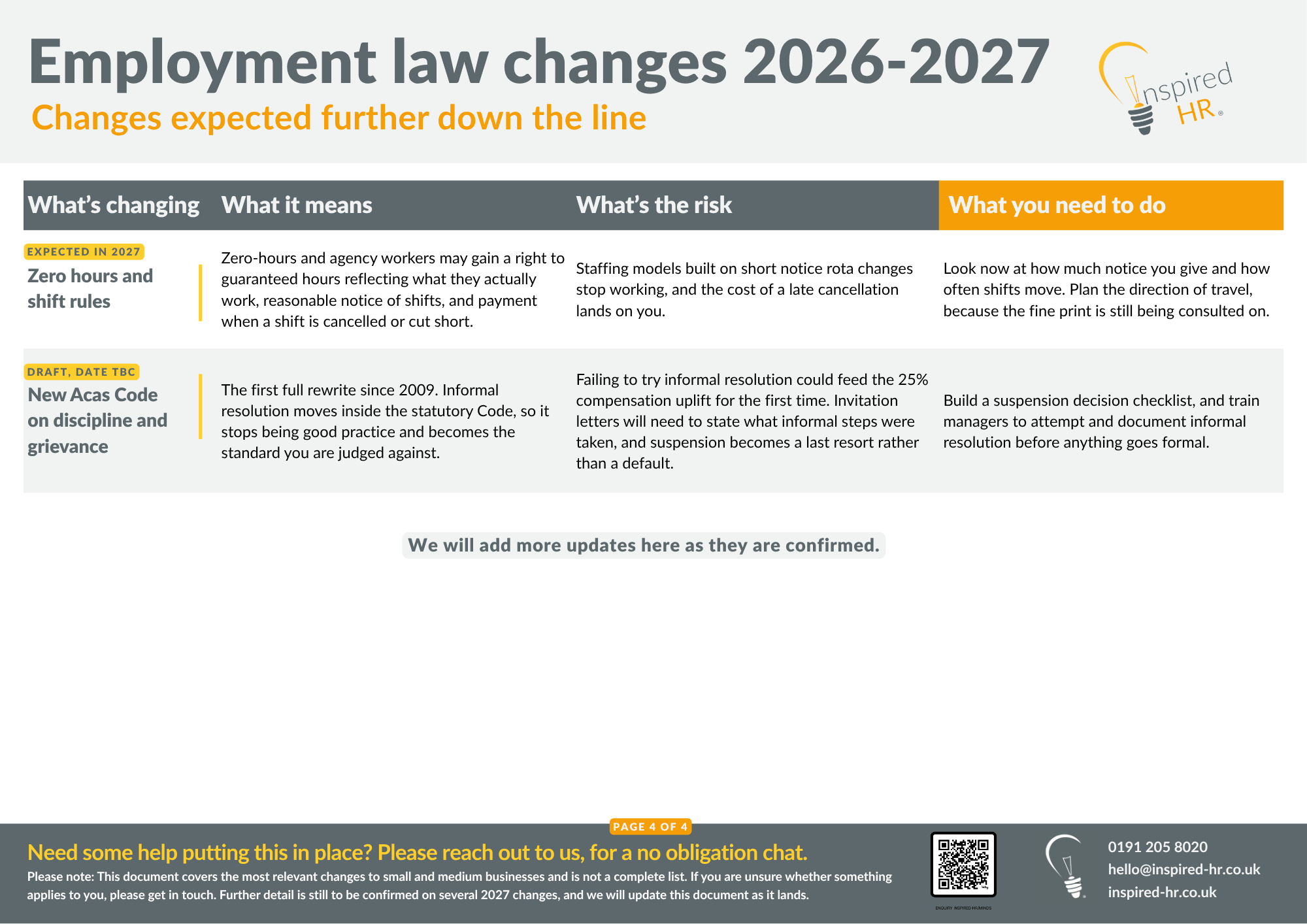
And that's not everything!
There are further changes being discussed, including new rules around zero-hours and agency workers, which could introduce guaranteed working hours, reasonable notice of shifts and compensation for last-minute cancellations.
A revised Acas Code on disciplinary and grievance procedures is also being developed, with greater emphasis on informal resolution and how employers manage workplace issues.
Some of the detail surrounding these changes is still being confirmed, so we'll continue to keep a close eye on developments and update our guidance as more information becomes available.
Want a copy of our Employment Law Guide?
You can request this through our Free Resources page.